











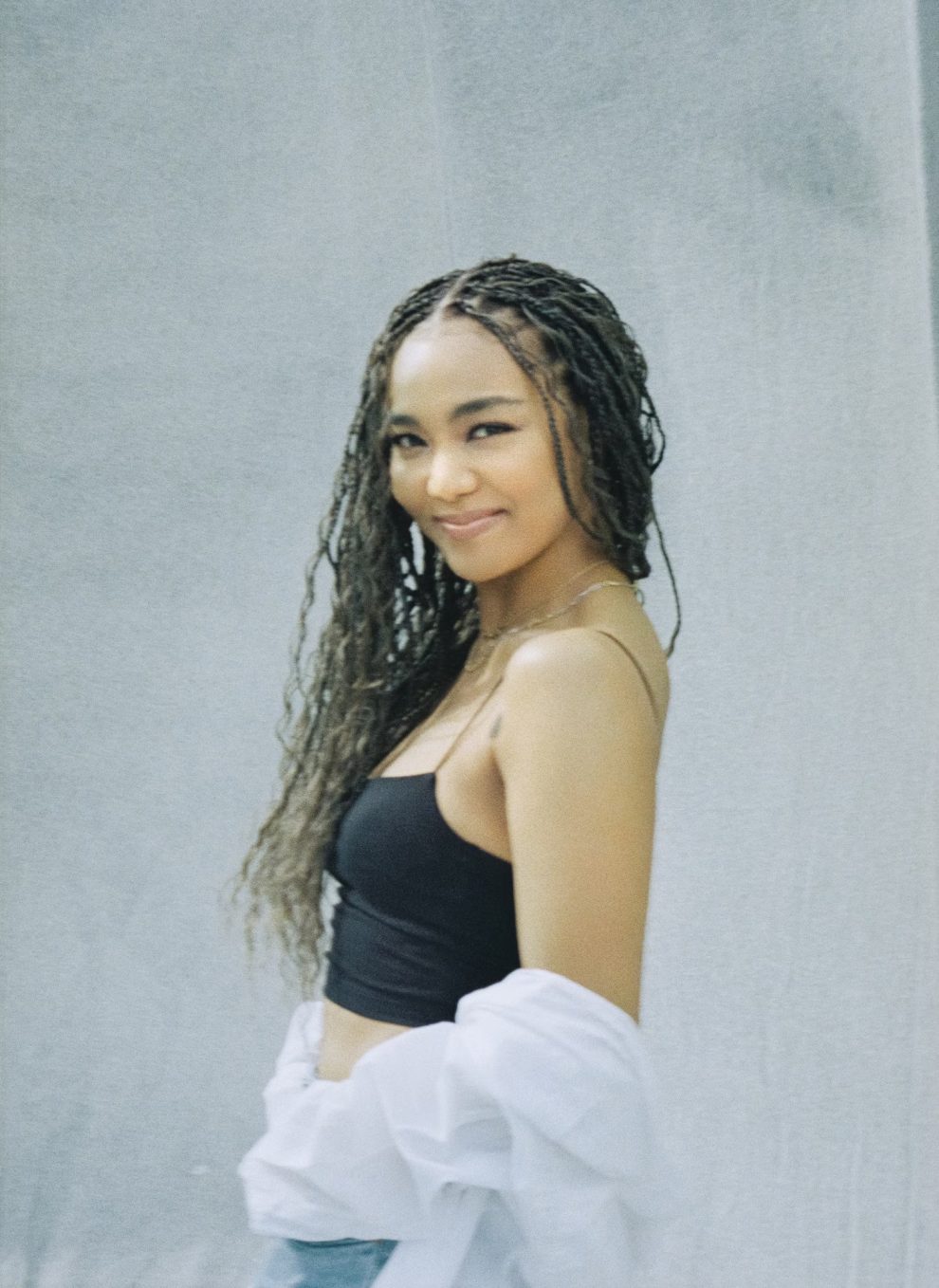

Last August, Crystal Kay toured North America for the first time in honor of her 25th anniversary! Before her New York concert, she sat down with Nante Japan to discuss her career, her reason for touring the US, her long history of collaborations (Namie Amuro, m-flo, Jin Akanshi, and Yellow Magic Orchestra), and more!
To celebrate her 40th birthday today, the interview is now being released! Check it out below!
You have previously done some shows in the US, so what made you want to expand and do a full US tour?
So the previous shows were more like test shows that I basically did on my own. Small scale, a little more laid back, acoustic sets. They had a really nice reception, so I started to think, “What if I had a proper band, a proper set? It would be even better.”
I had always been talking about this with my manager, who just recently became my manager, but we’ve been friends for like 18 years. We had an opportunity in December at AWA (Atlanta Anime Weekend), the anime convention in Atlanta, and that’s when we were like, “Alright, let’s put together a band, and let’s do this!” And it turned out to be pretty great! We were like, “We can do this! We should so expand this and do more shows!” And yeah, so it happened!
What is your favorite song to perform live?
That’s a really hard question, because I love all my songs. But it seems like people love “Kirakuni.” “hard to say” is fun too. I like “Ex-Boyfriend” too!
Ohh, that’s one of my personal favorites!
Thank you!
Speaking of that song, that actually leads us into our next question. When I interviewed m-flo in 2019, I asked who they enjoyed working with the most, and they immediately said your name.
Woo hoo!
Why do you think your collaborations with them are so dynamic?
I think it’s because we share a similar sense of musicality, if that makes sense. We both come from an international background. They went to international school, I went to American school. We both fluently speak English and Japanese. We understand the cultures. So yeah, I think that really translates. It’s really fun. I think we are able to express exactly what we want to express, because not a lot of people are doing that in Japan. That just makes it even more special.
You debuted at the beginning of a period that some have described as the “J-Urban Boom.” What are your favorite memories of this period?
Maybe it was because I couldn’t see too much beyond my circle, my bubble, because I was like 13, 14, and day to day was so busy and overwhelming because of school and work. Do you know how like back in the late 90s, early 00s the charts and music was so unified? It was so diverse but everyone knew the same stuff. Everyone loved the same stuff. All the artists, hip hop, rock, everyone was just like friends. It was a little utopia. But now I think as globalized as things have become, there are so many different outlets and niches and everything is so separated.
Everyone has their own bubble now.
Yeah, it wasn’t like that before. It was like, “If it feels good, we love it!”
What do you think of the current state of Japanese R&B?
To be honest, I’m really familiar with specific R&B singers that are out right now, but I do realize that there is more R&B influence in the mainstream. JPop, KPop, even the idol group songs. I think it’s becoming more and more Westernized in a really interesting way. It sounds great, it’s going in a nice direction. It’s really cool to see the younger generation kids’ musical palette expand to such a higher level. I think it’s because they have become so much more open to music from around the world. It’s really fun to see.
You were just speaking of idol groups, and it leads to another question. You also worked with Jin Akanishi a number of times in the past. How did these collaborations come about? His former management company (then known as Johnny & Associates / now STARTO ENTERTAINMENT) is known for not letting its talents perform with female acts, so why do you think you were able to work with him?
I think it’s because I’m a foreigner. I think I have this really cool ability to be neutral. Because that company is all idol boybands, they don’t want any romance scandals, but I don’t think I fall into that category because I’m a foreigner. I’m not a threat. Jin also did whatever he wanted to, he was the rebel, so he was going to make it happen anyway. I wasn’t a threat and we were really friends. I am an artist and it was a pure collaboration.
You worked with one of your idols before, Namie Amuro. What was that experience like?
That was crazy! I was not expecting that to even go through! I just kinda threw it out there when Universal was like, “Who would you want to collab with?” I listed her first. You just gotta ask right? Yeah, she said “Ok!”, and I was like “No way!” And then I said I wanted to do a video with her, so they asked, and she said “Ok!” And I was like, “Ok, if we’re going to do a music video, I want to dance with her,” and she ok’ed it! Hell yeah!
I was a dream come true! She’s like the Britney Spears of Japan. A fashion icon, an icon in general! A legend really! The fact that I got to work with her and leave a project that will last forever, before her retirement, is really special. And I got to perform with her at her show, OMG! Those are probably my top two moments I will never forget.
That’s your favorite moment of your career?
That’s really hard. Actually that whole experience is #1. Performing at Royal Albert Hall for “Final Fantasy” would be #2. That was crazy as well!
Speaking of legendary performers, you worked with Yellow Magic Orchestra on “Thank You for Talkin’ to Me Africa.” What was that like?
That was wild! I was not expecting them to reach out and ask me to do that! And that song, it’s such a specific song, it’s not a song to cover! It’s so funky, so abstract, how was I going to pull that off? But I was open to it, of course. You never say no to YMO. It was such an honor. It was really fun, but I think I had a hard time because it’s so nuanced. It’s not my normal genre that I sing. I did my best to put my funk on it. When we performed that at their festival, “World Happiness”, I was so nervous. I had way too much wine before the show, and when I got on stage I was in the zone.
Is this the one on YouTube?
Yeah.
Because in that video, you come on stage and you’re like “Hey!”, and you’re swaying your hips and your hair is blowing!
Yes!
Now I know why!
Now you know why!
During your career, how do you think the industry has changed?
How do I think the music industry has changed? I think a big change is streaming. That’s obviously big. The growth of idols. They really dominate. They represent Japanese culture. Also I think the power of KPop. I see a huge shift. I see a lot of influence in the Japanese acts, boybands and girl groups. You can’t even tell who is Japanese and who is Korean now, which is really cool, because the two countries haven’t always had the best relationship. I think Japan is really interested in Korean culture, and vice versa. I think it’s a lovely blend.
We’re like the same age, so our generation has really seen so much. The shift in technology, the shift in music. I’m trying to think of it all.
What is the biggest lesson you’ve learned in your career?
My biggest lesson… That the answer was always in me. Cultural identity. You know I’ve always grown up with identity conflicts. What’s the best way? What’s the best sound? It’s always come down to what I’m comfortable with, what’s the most authentic to me. I think that’s the answer for anything. It’s here. We have the answer, but we’re looking elsewhere. It’s in us.